
We wanted to see if we could get a conclusion in two hours or less. The game was set-up without using the “Battle Builder” cards, with each side deploying a Command alternately in their own half of the table.
Each army consisted of three corps, each of 9 brigades in three divisions, plus, a cavalry division of three brigades. Note that in AGE subordinate HQ structures within a represented Command (typically a corps) are not represented, but are factored into the Endeavour calculation for each army. The Army Commander formed a fourth Command, with 3 stands or army-level artillery attached to it.
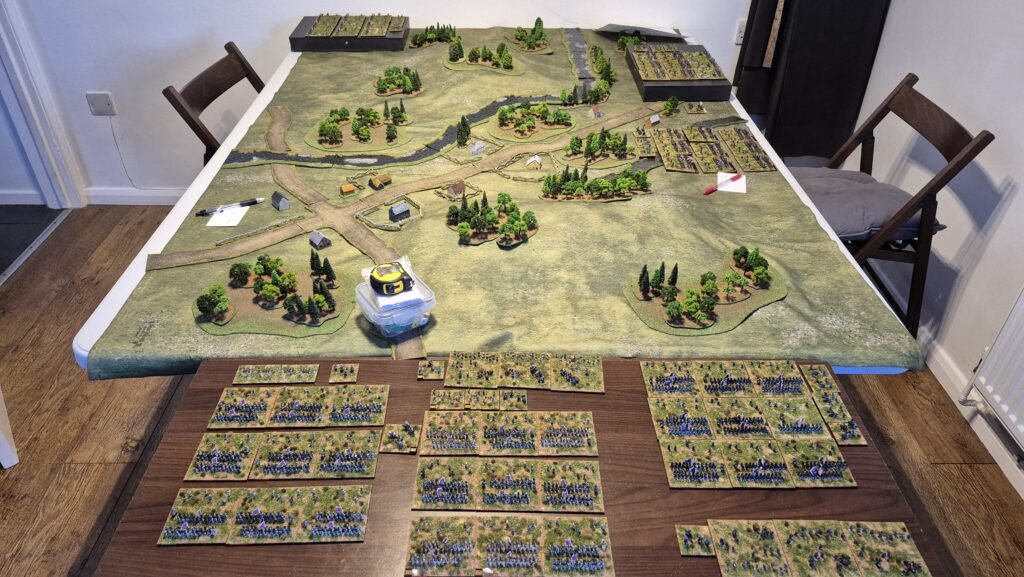
For speed, I had laid out the armies in advance on a separate table. so you can see the armies. Usually, we have one corps to a file box, and deploy directly from them.
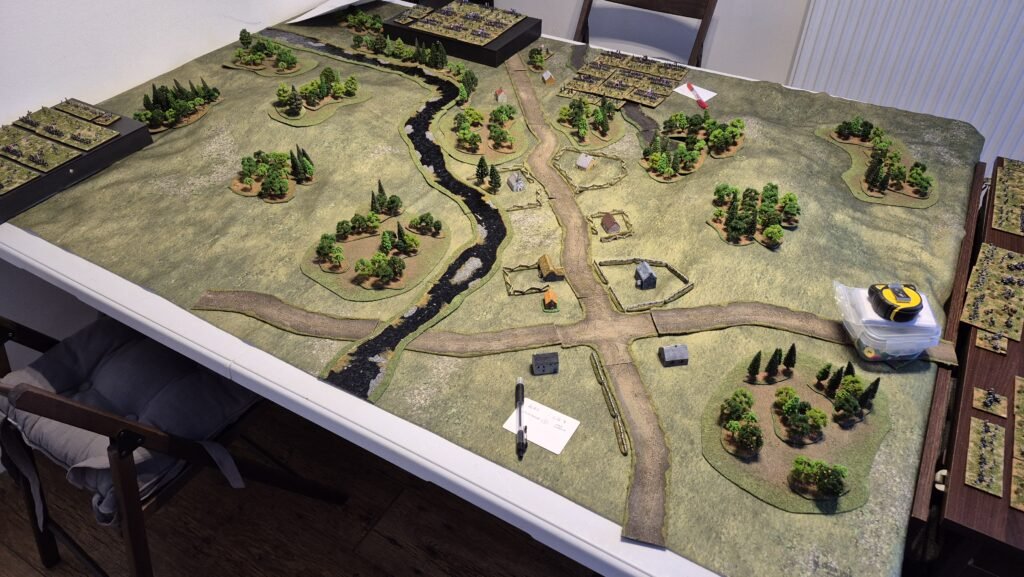
Each army has a number calculated for its Command Quality (CQ), Endeavour, and One third loss. We write these on small cards. They are blank playing cards, and can be bought in packs very cheaply on Amazon. They give each side a nice little ready-reckoner to refer to and mark the lowering of Endeavour (and very rarely CQ) during the game.
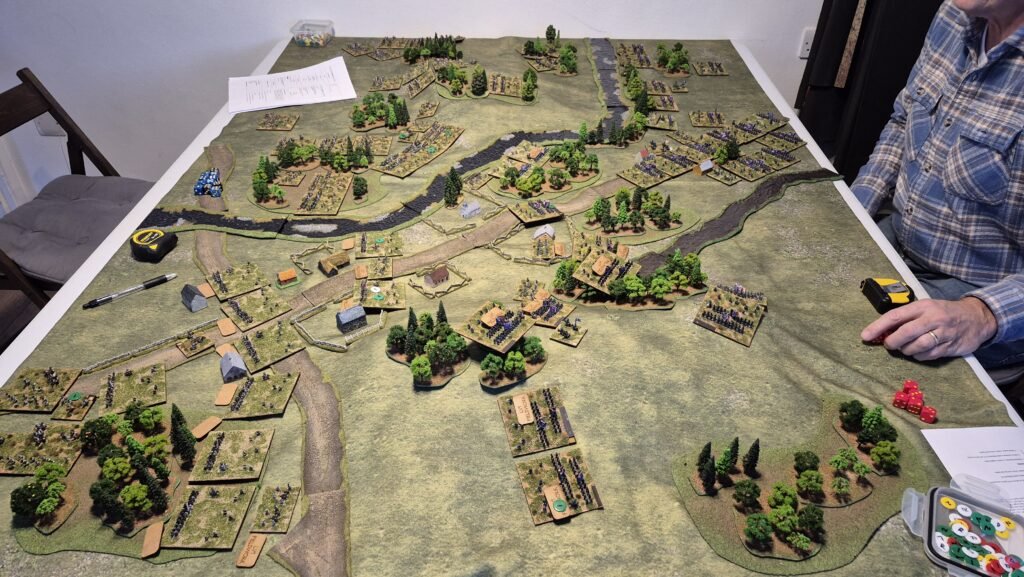
Once deployed we rolled for turn one initiative and began. The above photo shows the end of turn one. Note a few units and leaders have gained counters to denote the raising of the BF (Battle Fatigue). The leaders raise their BF whenever they attempt to control their Command (representing the tiring process of communication, people running around, stress, ADCs vanishing and being killed, etc), while the units accrued BF through artillery fire (Bombardment Phase).
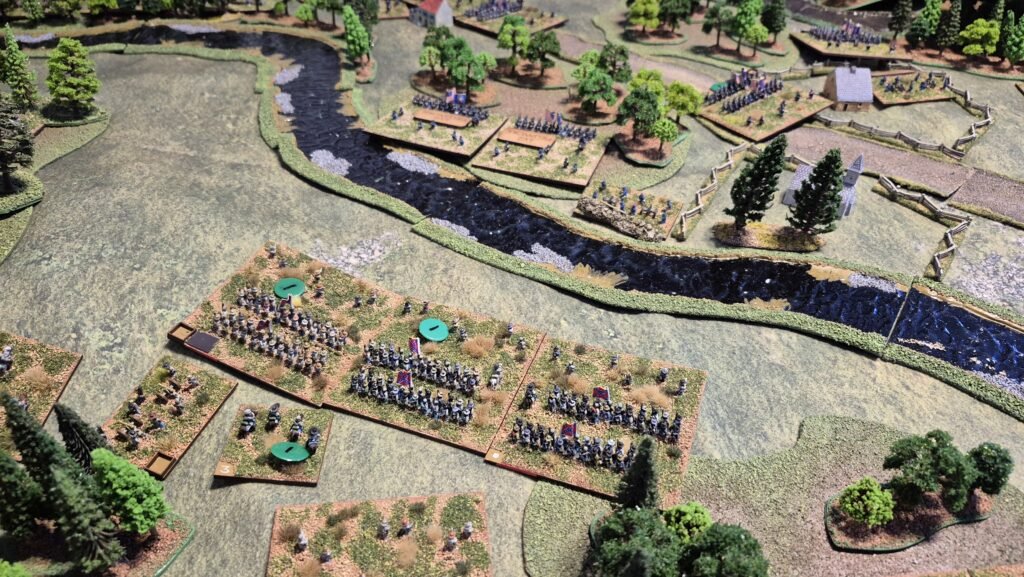
The above image shows the end of turn one in more detail. Reb units first got hit by Union artillery fire before commencing their march. The Reb corps commander then raised his BF by one to try and fully control his corps. His units then moved forward towards the creek. As no units are within Engagement range (4″ for the ACW period), there is no further action here.
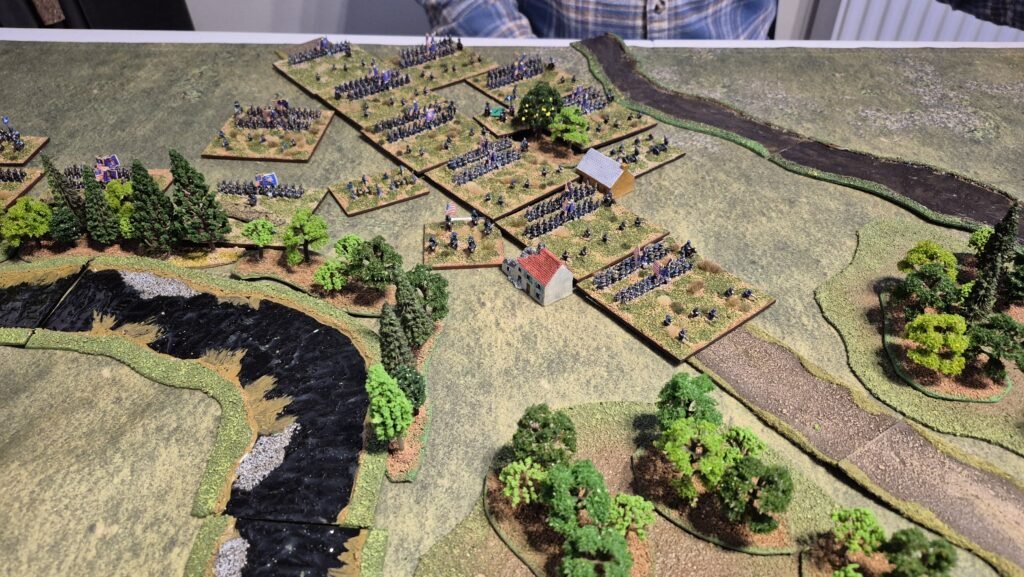
One Union corps was initially deployed in column for a rapid advance. However, the corps commander failed to control his formations and they stalled. Perhaps a unit halted or moved off the road then turned back? Or maybe a small Reb vedette opened fire then skedaddled, provoking a halt and a minor deployment?. This happened often in the ACW (and other periods, but was a particular problem in the ACW in areas where there was significant woodland), and seemingly small problems on the march could have a knock-on effect further down a substantial column that took time to resolve, sometimes hours.
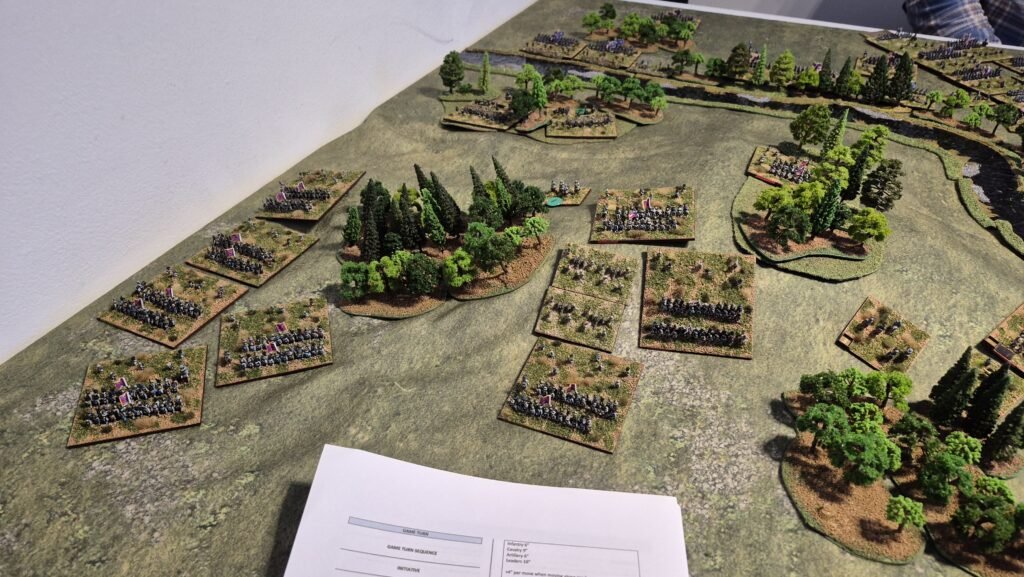
On the Reb left, a corps moves forward to try and reach the thinly defended Union right flank before more men arrive.
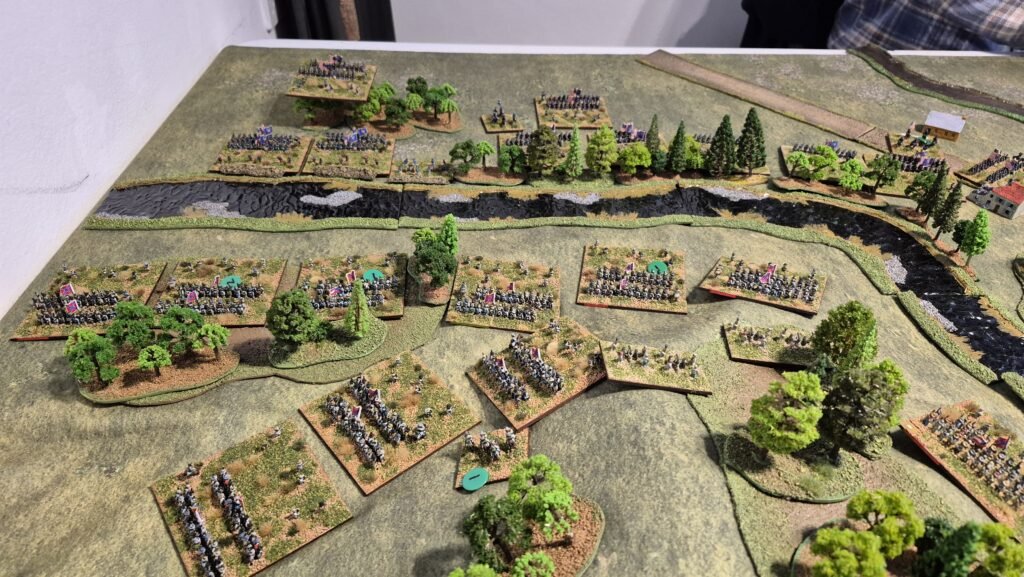
By the end of turn two the entire corps had moved up and was ready for an assault across the creek.
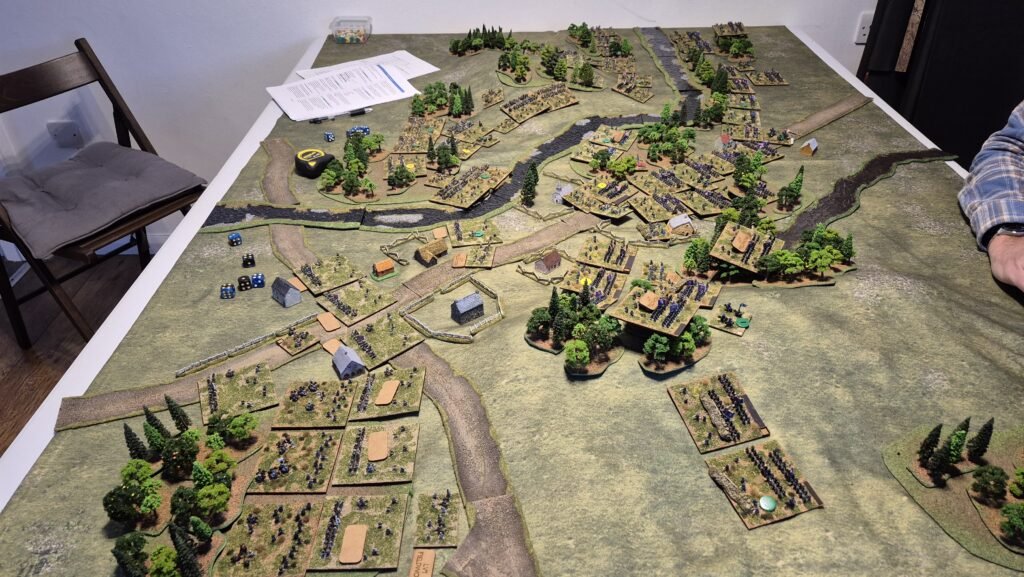
A wider image of the situation at the end of turn two. Three hours have passed. On the Reb right, infantry and cavalry have thrown up earthworks. This was a bad move on my part that wasted time, but I had assumed my opponents central corps column was heading that way, so I spent the time digging in. However, he instead turned them to counter my assault across the creek and instead press my centre.
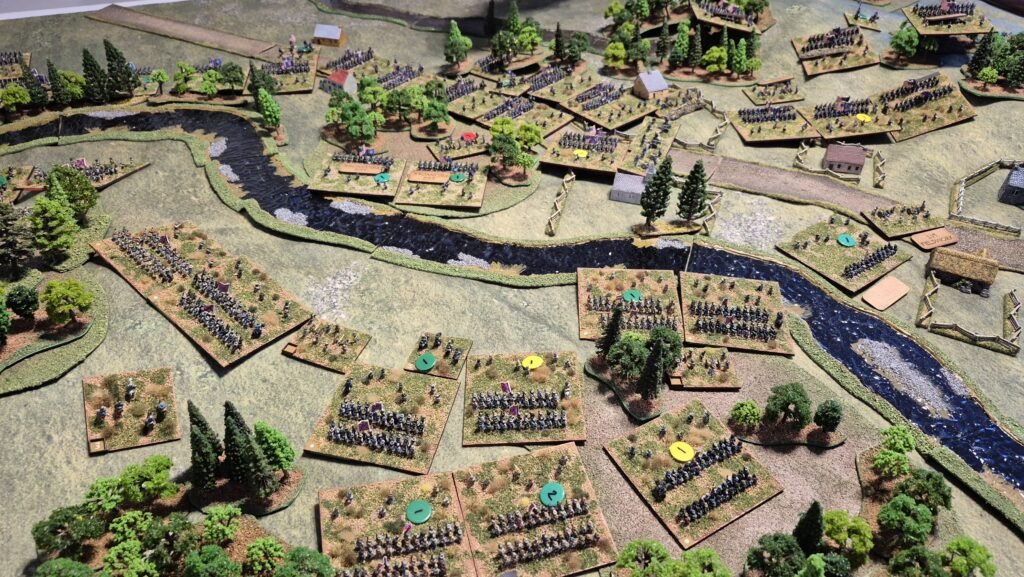
My initial assaults across the creek were thrown back. I went in piecemeal. Supports are vital for success and you should use your better units as the fighting unit wherever possible. As can be seen, two of my brigades are now Worn (1), with yellow counters.
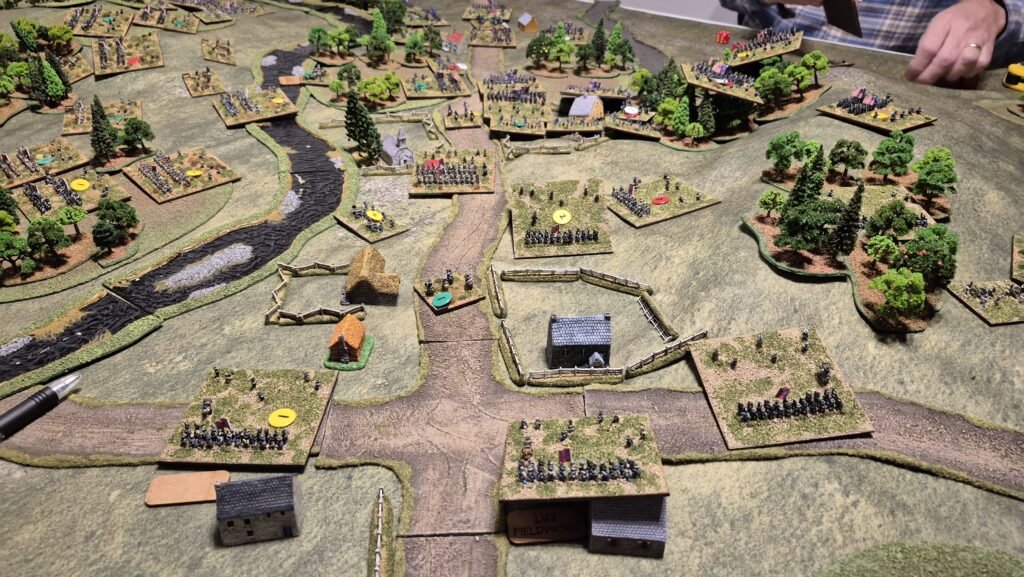
This is turn three. The Rebs have pushed up the road from the crossroads but have hit the centre Union corps. They sent several of its brigades back in retreat, and because the Union brigades were stacked-up, as they retreated they passed through other units, causing two of them to retreat as well. Although I was far forward, as can be seen, two of my brigades are now Exhausted (red counters), with two more Worn (yellow).
We stopped taking photos then. I got excited. The game lasted into a fourth turn, for a total of 6 hours battle time. At the end of that turn, Union Endeavour hit zero. This was quite a surprise, but a series of good rolls, two of his corps being classed as “Stricken” and a couple of down leaders added dice to the pool which produced a good roll. The Union had also lost several key veteran brigades that were broken in that turn.
The game lasted 2.5 hours. So a little longer than we had hoped, but we did start warbling on about other things, as wargamers do.
All in all, a good run through the AGE rules, and hopefully this post highlights how a decent sized game can be put together and resolved in a reasonable time.